
Create “Hard Transition” Gradients
By using the color stop positions gradients can be designed to be very short transitions, or “hard transitions”, to create new styling options.
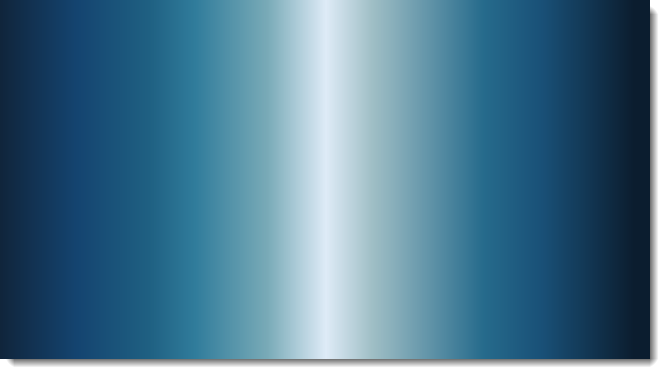
As example, this full slide PowerPoint rectangle is created with 10 color stops* going from very dark blue to blue with long/smooth transition and a white hotspot (vertical line) created by positioning the color stops very close to the white creating “hard transitions.”

* TIP: the maximum number of color stops PowerPoint supports is 10.
Download a slide with this gradient fill shape, here.
Troy @ TLC
PowerPoint Rainbow Gradient
Gradients from one color to another have nice smooth transitions. As example this 6 color rainbow:
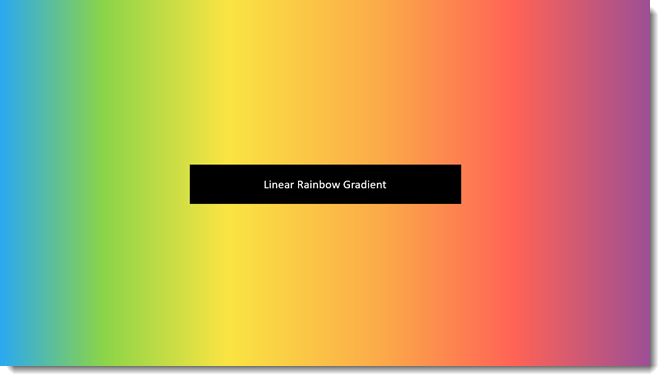
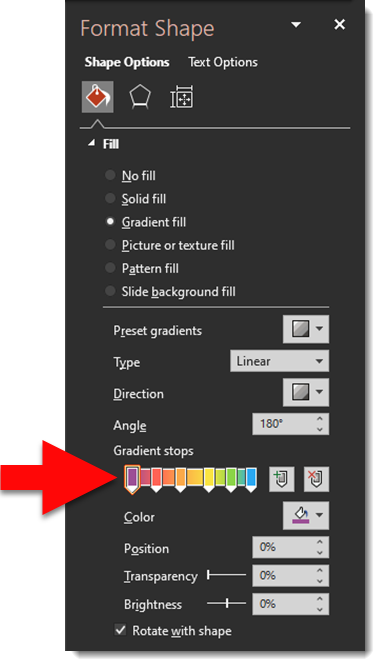
On the design, the gradient fill is composed of 6 equally spaced color stops using the rainbow color spectrum.
Download the Linear Gradient Rainbow PowerPoint shape here.
Troy @ TLC
New episode on The Presentation Podcast!
Presentation design work is often developing a PowerPoint template as a standalone project or developing a PowerPoint template that is then used for the presentation design phase. On this episode, Troy & Lori, the co-founders of TLC Creative Services, Inc. chat about PowerPoint template design projects they have each recently completed.
Free Preset Gradients! Fade from color to “nothing”
One of the easiest, and most useful, design elements for slide design is a “fade” gradient. A 2 stop gradient that goes from a solid color* to transparent.
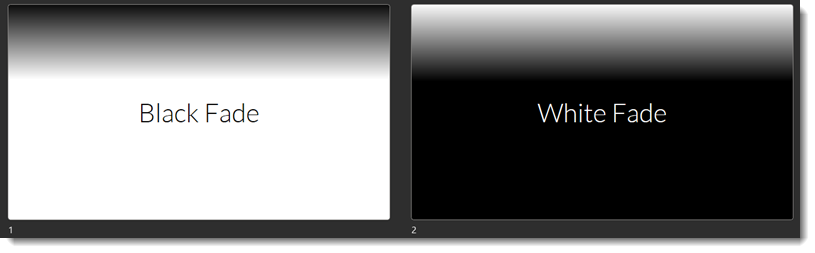
Download these slides to have preset white fade and black fade gradients. DOWNLOAD HERE
Troy @ TLC
Color and Transparency – This is the Secret to Many Gradients
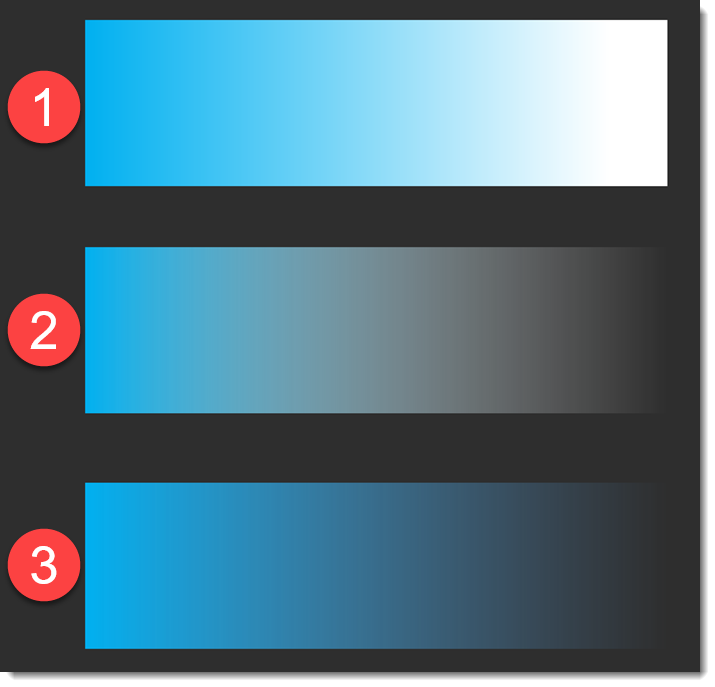
These 3 gradients are the same PowerPoint rectangle set as a 2 stop gradient. The goal is a smooth gradient from the solid color on the left to a nice transparency on the right. The visual appearance is a “1 stop gradient; color to nothing”.
#1 is solid colors, blue to white.
#2 is the solid blue to the white set to 100% transparency (ie. not visible)
#3 is the solid blue to a 100% transparency blue (this is the secret!)
Looking at the details for the three gradients.
#1 displays exactly as expected; solid blue to solid white with a smooth gradient from left to right.
#2 is not what is expected; solid blue to a muddy grey. Note, stop #2 is white, which does not match the step #1 color and PowerPoint is showing the color blend from blue to white in the visible gradient (ick!).
#3 is the exact same transparency settings, but color stop #2 has been updated to be the same blue as stop #1. The result is a wonderful, smooth gradient of the left blue fading to nothing. The reason is that the color blend from blue-to-the-same-blue does not create any tertiary colors in the blend.
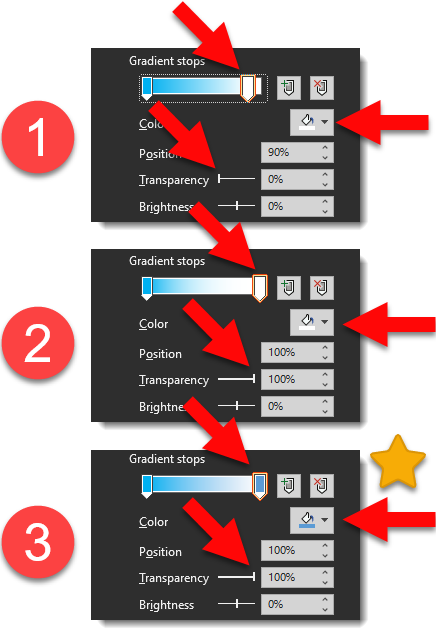
* * #3 is the secret to creating smooth fades to nothing in PowerPoint!
Troy @ TLC
Stop! Gradients are composed of “Gradient Stops”
Gradients are created in the Shape Format dialog and adding additional color stops to a shape. These are all PowerPoint rectangles with 2-4 color stops added to the shape (with different colors, positions, angles, transparency and types).
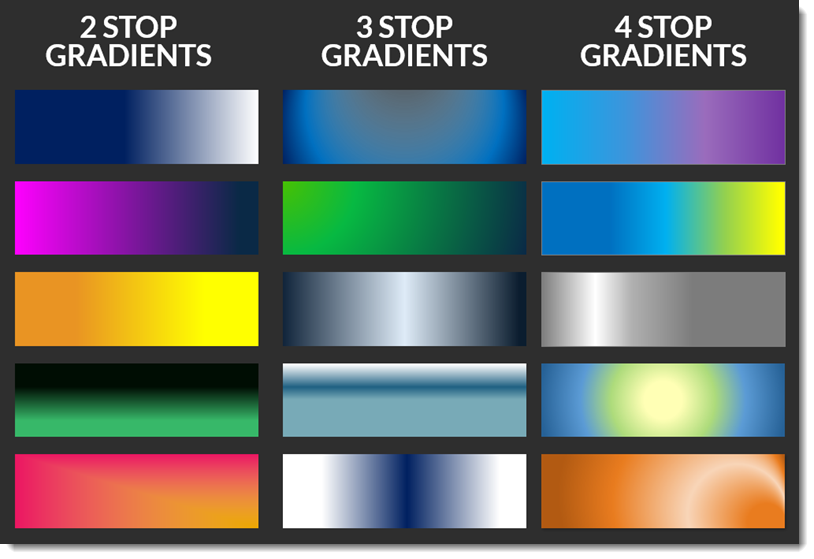
The simple gradient is 2 stops where one side of the PowerPoint shape gets its color from one of the color stops and the other side of the PowerPoint shape gets its color from the second stop.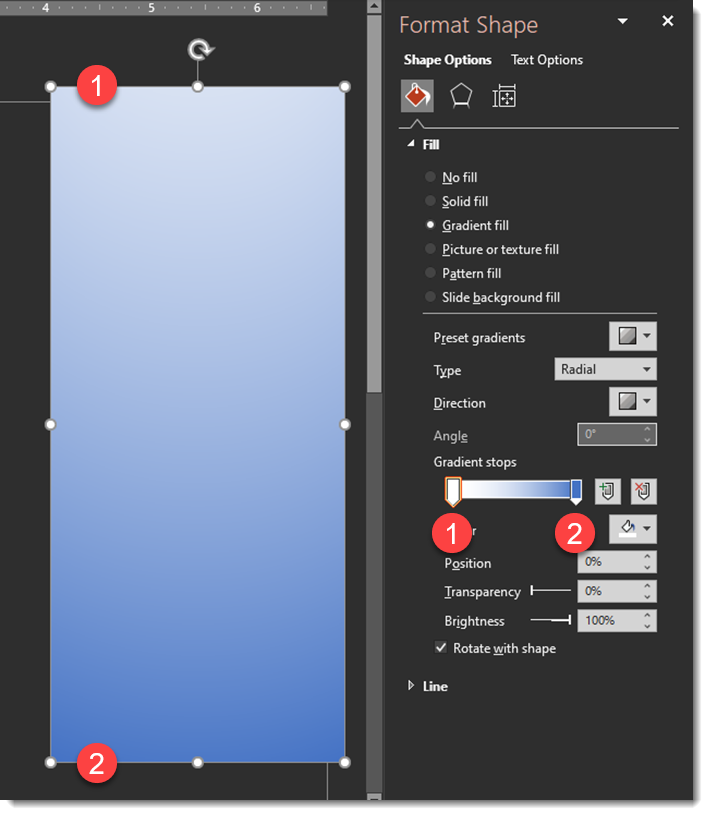
TIP: PowerPoint can have a maximum of 10 color stops.
Troy @ TLC
PowerPoint Gradients – All Month!
At the 2021 Presentation Summit one of my speaking sessions was an indepth look at design options using PowerPoint gradients. Time to share some of the great PPT Gradients examples from that talk here on The PowerPoint Blog!
-Troy @ TLC