Resource/Misc

Create Charts for Video and Print Projects in PowerPoint – Really!

Charts can be a powerful visual for any presentation to really make a memorable, or easily understandable, point. When you think about colorful bar, line and pie charts, everyone immediately thinks of PowerPoint slides. What about adding charts to a print or video project that is designed in Adobe InDesign or Premiere? While PowerPoint has robust chart and bar graph-building features, most print and video software do not.

InDesign is amazing for layout and print design, but it relies on charts and tables being important elements. The same for Adobe video editing software, Premiere. Charts, tables, and most all elements in a video are designed outside the app and imported.

And this need for externally created charts is where PowerPoint comes in. Whether you’re working on a print layout or editing a video that needs to look polished and professional, PowerPoint is ideal for building visuals that can easily be edited and exported for use in other software.

Step 1: Create a Chart in PowerPoint

All natively created charts in PowerPoint have a mini Excel sheet for the data.

And PowerPoint is truly one of the best tools for creating charts, including the option to use the data and instantly change from a bar chart to pie charts, line graphs, stacked or scatter plot. And all charts use the preset color scheme applied to that slide deck. Update the PowerPoint color scheme and all charts in the slide deck instantly update! It’s easy to style your data with colors, fonts, and labels. And since you’re doing it inside PowerPoint, it’s all very visual.

Step 2: Export the Chart as an Image for Print

Once your chart is sized and styled to what is needed in the print design, export it as an image for use in Adobe InDesign or Illustrator.

1. Click on the chart to select it.

2. Right-click and choose Save as Picture.

3. Choose PNG, which creates a static image of the chart with a transparent background.

4. Or choose SVG to create a static image of the chart that is a full vector format – great for pulling into an Adobe Illustrator project.

5. Import the new file into your InDesign layout like any other image.

The final result is clean and sharp, and you didn’t have to deal with other clunky chart-building tools and work-arounds.

Step 3: Using PowerPoint Charts in Premiere for Video

If you want to include charts in a video project using Adobe Premiere Pro, you’ve got a couple of options.

Option 1: Static chart image

Just like for print, export your chart as a PNG and bring it into Premiere. From here you can animate it with simple scale or opacity transitions to make the chart more visually appealing. But there is a bit more planning in the export process.

Option 2: Animate inside PowerPoint, export as video

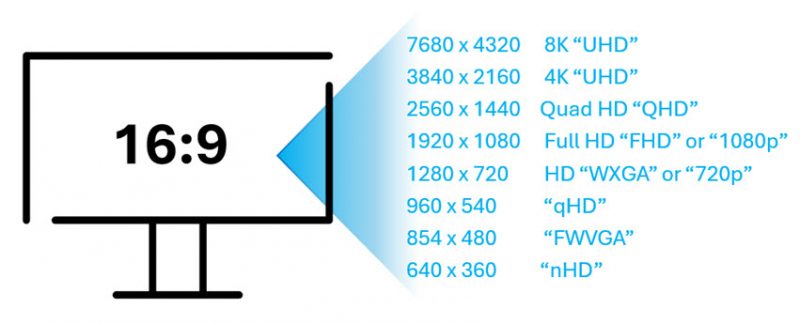
PowerPoint has great animation capabilities, including animating charts. One option is to export the slide as a video (eg. 1920×1080 .MP4) to add to the Premiere video project.  In PowerPoint go to File > Export > Create a Video. Choose either an HD or 4K format.

But the exported video will be the full slide, including the background. If the video project needs to add the chart as a composited element with other elements in the video project, the above chart example was exported as a series of 6 PNG images, added to the Premiere project and each PNG animated with Premiere’s entrance effects. Plan the animation, then in PowerPoint duplicate the chart slide, in this scenario 6Xs. Then go through each slide, deleting the elements that are not part of that stage of the animation.

Using PowerPoint as a design tool is not part of video editing training, but as a someone that has created lots and lots of chart elements for successful print design and video projects, PowerPoint is the right tool. Next time a chart is needed as an imported element for a project, PowerPoint is a go to for both great visuals and saving design time.

– Mike, and the TLC Creative Services design team

By |2025-06-26T07:58:00-07:00April 25th, 2025|PowerPoint, Resource/Misc|

The Presentation Podcast talked about Data Viz in 2016

Throughout April The PowerPoint Blog is focused on charts and data viz in PowerPoint. From 2016 is this great conversation about data viz, episode 19 of The Presentation Podcast. It definitely is in line with the blog series and worth a mention and a relisten (or read through of the show notes outline)!

Original blog post announcing the podcast episode is here.

Episode 19 replay is available, with show notes, here.

By |2025-03-29T11:08:34-07:00April 18th, 2025|PowerPoint, Resource/Misc|

New Podcast Episode Available! “The Secret Sauce to Stunning PowerPoint Presentations – Navigating the World of Vector Graphics!”

In the latest episode of The Presentation Podcast, Troy and Nolan delve into everything PowerPoint and vector. What does PowerPoint consider a vector graphic? What types of vector files does PowerPoint recognize? What are PowerPoint limitations with vector graphics? This episode is a treasure trove of insights, practical tips, and expert advice on leveraging vector graphics, particularly .SVGs, for great presentation design. Have a listen to see where the conversation goes!

Listen to episode 220 here.

By |2025-04-11T18:34:29-07:00April 16th, 2025|Resource/Misc|

New podcast episode available! “Exploring Canva’s Presentation Power: A Conversation with Dani Watkins”

A new episode of The Presentation Podcast now available!

Have you wondered how Canva’s presentation features stack up against PowerPoint? This podcast episode we have enlightening chat with Dani Watkins, a “Canvassador” about all things Canva and Canva Presentation! Dani shared how Canva’s user-friendly interface and extensive design options have transformed her approach to presentation design.

From repurposing graphics across various formats to the seamless remote sharing capabilities. Plus, did you know Canva now offers offline capabilities for presentations? We didn’t either, but Dani gets us up to speed with Canva Presentation’s latest offerings.

Listen on your favorite podcast app, or at The Presentation Podcast site here.

By |2025-03-29T10:48:13-07:00April 2nd, 2025|Resource/Misc|

New Podcast Episode Available! Navigating the Data Visualization Landscape: Tools, Tips, and Techniques with Ann K. Emery

New episode of The Presentation Podcast now available!

Data visualization is an essential skill in today’s data-driven world. It transforms raw data into visual formats like charts, graphs, and maps, making complex information understandable and engaging. In this podcast episode, Troy, Sandy and Nolan talk with Ann K. Emery of Depict Data Studio about the nuances of data visualization tools and best practices – especially for presentations. Listen on your favorite podcast app, or at The Presentation Podcast site here.

By |2025-03-18T14:50:52-07:00March 19th, 2025|Resource/Misc|

Is Helvetica Bad?

Helvetica is a classic and widely used font known for its clean and modern appearance. However, when a PowerPoint presentation created on a Mac is opened on a Windows computer, the Helvetica font used might not display as expected. This issue stems from the differences between how macOS and Windows handle fonts.

On a Mac, Helvetica is one of the default Mac OS system fonts. This version of Helvetica is optimized for macOS and integrates seamlessly into the operating system – like how Aptos does for Windows OS (although Aptos is not locked to Windows and can be installed on a Mac!). But the Helvetica available on Mac devices is unique to the macOS, and only usable on Mac devices. A windows device does not see the Mac version of Helvetica as identical to any version that can be installed on Windows. The files available for Windows differ from the macOS version in subtle ways, such as variations in spacing, kerning, and glyphs. Like any time PowerPoint replaces a font not installed with another font, content is not displayed as designed and things like line wraps can change.

Because the version of Helvetica used Mac devices cannot be used outside a Mac (such as on a Windows device), it should not be used on presentations that will be open on a Windows system.

But I have Helvetica installed (on my Windows device)! Yes you do, but it is a different version of Helvetica, and PowerPoint sees the Mac version and the installed version on the Windows computer as different fonts (and they are; remember, different spacing, kerning, glyphs). Same name, but different…

While Helvetica is a widely loved and effective font, its cross-platform compatibility can cause confusion when switching between macOS and Windows. It is not that Helvetica is inherently problematic, it is a good font. But rather the Mac version is only available on Macs, and that makes it a bad choice for cross-platform use.

An opinion from the TLC Creative design team

By |2025-03-16T08:55:13-07:00March 17th, 2025|Resource/Misc|

New Podcast Episode Available! “Based on the PowerPoint template, is this Going To Be A Difficult Project?”

New episode of The Presentation Podcast now available!

In the latest episode of The Presentation Podcast, our three seasoned presentation designers: Troy Chollar from TLC Creative Services, Sandy Johnson from Presentation Wiz, and Nolan Haims from Nolan Haims Creative discuss PowerPoint templates from the perspective of evaluating client provided files – and the state of the template provided. A conversation with a wealth of knowledge on PowerPoint templates! Listen on your favorite podcast app, or at The Presentation Podcast site here.

By |2025-03-03T16:46:14-08:00March 5th, 2025|Resource/Misc|

How to use Google Fonts in PowerPoint

Google Fonts is a great resource for finding and using custom fonts for design projects; print, app, web, and PowerPoint.

Google Fonts is one of the most extensive libraries of royalty-free and open source fonts. Read the details, but I interpret the FAQ that these fonts can be used anywhere!

A unique feature of Google Fonts is that they can be used dynamically. For example, when creating a website that uses Google Fonts, users will be able to view the Google Font content without having to install the fonts on their device. However, PowerPoint does not have the ability to dynamically load Google Fonts. That said, because Google Fonts are available as a downloadable file, they can be used for PowerPoint presentation the same way as any other custom fonts (see our “How to Install Custom Fonts” post for more details).

NOTE: this process is for installing Google Fonts on Windows or Mac computers. Microsoft Teams and web-based presentations will not be able to use custom fonts unless they are embedded (and even then, there are lots of variables on if the custom fonts will display).

  • Head over to the Google Fonts website at https://fonts.google.com/ to browse the library, by searching for a specific font family or using their various filters.

  • After choosing a font, simply click the “get font” button in the upper right corner. and download the .zip file.
    NOTE: Google fonts are available in a variety of file formats; OTF, TTF and the newer variable font format, WOFF. Currently, it’s best to install and use the OTF format for maximum compatibility.

  • Uncompress the .zip folder. Install the .OTF file(s) by right clicking the file and selecting “Install”. Or double-click the font to open the preview, and use the install button here.

TIP: Because Microsoft PowerPoint does a poor job of informing users of custom fonts needed for a presentation, be sure to include custom font info in the slide deck (as a hidden slide, or in the Presenter Notes on slide 1).

By |2025-03-03T16:38:13-08:00March 3rd, 2025|PowerPoint, Resource/Misc, Software/Add-Ins|

New Podcast Episode Available! Episode 216, “Does the Storytelling Animation design trend apply to us in the presentation design space?”

New episode of The Presentation Podcast now available!

“Does the Storytelling Animation design trend apply to us in the presentation design space?” In the latest episode of The Presentation Podcast, Troy, Sandy, Nolan, and Lori delve into the evolving role of animation in presentation design – particularly within PowerPoint. They explore how storytelling animation is becoming a significant trend in many aspects of graphic design and discuss how animation can be effectively incorporated into presentations to support the message. Listen on your favorite podcast app, or at The Presentation Podcast site here.

By |2025-02-16T09:26:02-08:00February 19th, 2025|Resource/Misc|

New Podcast Episode Available! “Dollars and Designs: Essential Financial & Business Tips for Presentation Designers”

New episode of The Presentation Podcast now available!

Episode 215 of The Presentation Podcast has the hosts, Troy Chollar, Nolan Haims, Sandra Johnson, and Lori Chollar delve into the financial side of running a presentation design business. This episode is a treasure trove of insights on managing finances, from invoicing and insurance to business structure and studio operations. Listen on your favorite podcast app, or at The Presentation Podcast site here.

By |2025-02-07T16:14:17-08:00February 5th, 2025|Resource/Misc|
Go to Top