
What is the Template Color Scheme Name?
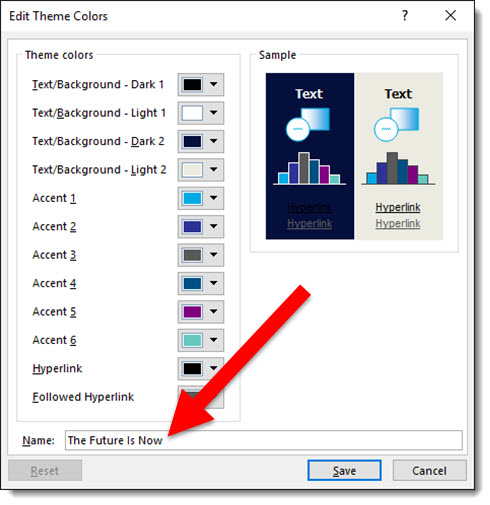
Every template has a Custom Color Scheme. And every color scheme has a custom name. For example: Here is a custom PowerPoint template I am working on, and I named the template color scheme “The Future Is Now” which is the theme name of the event where it will be used.
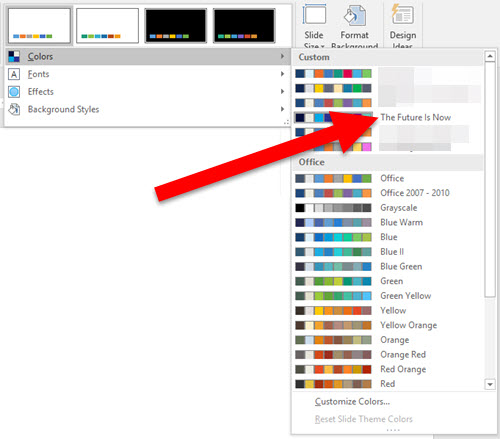
And when I look at the color schemes available on my computer, this theme is listed – because it was created on this computer:
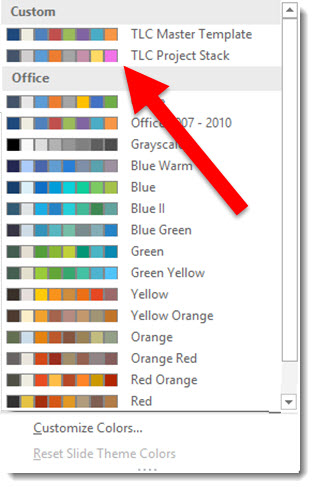
But on any other computer, with the template open, if I look at the color schemes, The Future Is Now is not listed:
To find the Custom Color Scheme name, do this:
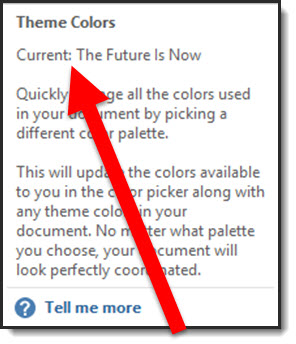
- Go to VIEW > SLIDE MASTER > BACKGROUND > mouse over (do not click) COLORS

- The pop up dialog shows the current template color scheme name
Now you can edit the existing color scheme and know what name to give it.
-Troy @ TLC
Snap to Grid and Nudge
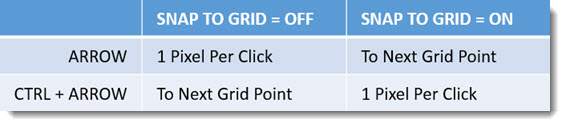
Why do shapes sometimes jump further than you want when moving them with the arrow key? What is the PowerPoint Grid? How are they connected?
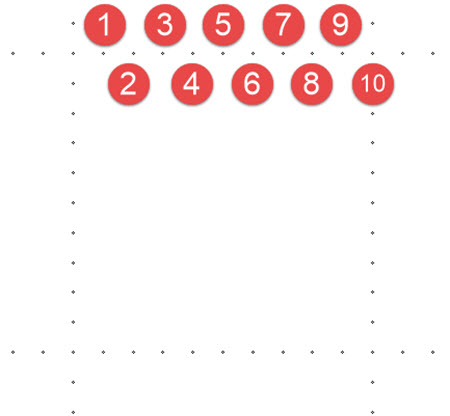
Let’s start with the PowerPoint Grid. Using a PowerPoint Grid can be a great tool for slide layout and design. To turn it on/off go to VIEW > SHOW > GRIDLINES check box. Once it’s checked, you’ll see a dotted line grid like this:
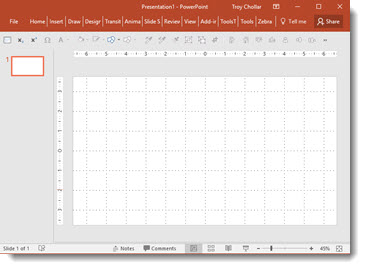
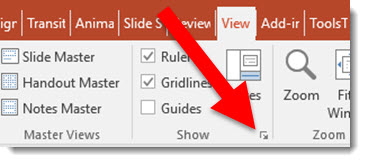
There are some options, such as the grid spacing, and another way to turn on/off. Open the GRID AND GUIDES dialog by going to VIEW > SHOW > click the Options box:
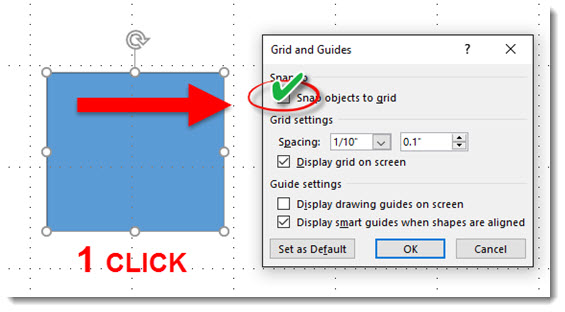
The GRID AND GUIDES dialog has several options for guides, snapping, and grids:
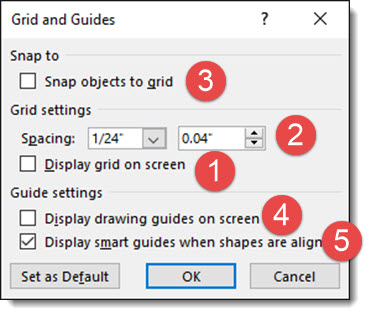
1- DISPLAY GRID ON SCREEN is the same as the above VIEW > SHOW > GRIDLINES. Both turn on/off the gridlines.
2- The spacing, or size of the grid, can be changed here. (Note: The grid spacing is used for the document, so you cannot have a different PowerPoint Grid mixed into a single presentation file.)
3- SNAP OBJECTS TO GRID is what enables objects (shapes, photos, lines, etc.) to “jump” to a location when you are moving them. They are “jumping” to the next gridline. (Note 1: The grid does not need to be visible/on for this to be active. Note 2: I personally do not like objects jumping to locations, so Snap to Grid is turned off on my design computer.)
4- DISPLAY DRAWING GUIDES ON SCREEN can also be accessed a few ways, including as a button on my custom QAT (Note: I use guides in my design process much more than grids).
5- DISPLAY SMART GUIDES WHEN SHAPES ARE ALIGNED is a love-it or hate-it feature (I am in between and turn this on/off as the design needs). It is like SNAP TO GRID, but instead objects snap into alignment with other objects.
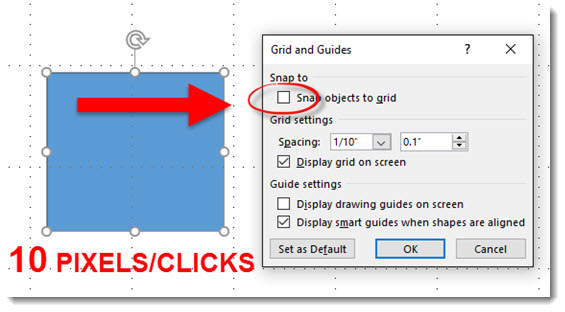
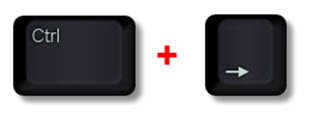
Summary (thanks MS Blair for sending out this simplified grid! [which I modified]):
-Troy @ TLC
Hightail Spaces Proofing Tools
Hightail’s newest feature, Spaces, offers lots of online proofing and collaboration tools (see previous post for review of using Spaces video proofing). In addition, Spaces is able to upload and review a variety of different file formats.

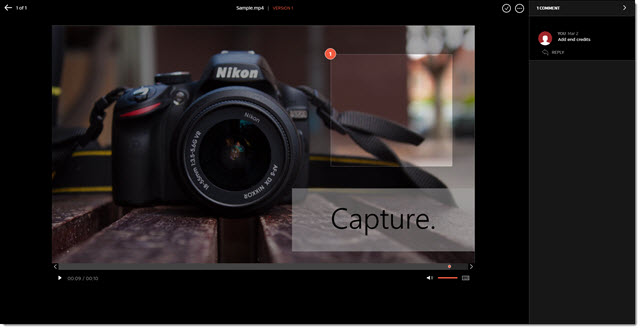
Video files (.mp4, .wmv, .mov, etc.):
Allows you to view the video directly in the Spaces browser window (not necessary to download), comments can be placed on specific frames throughout the video as well.
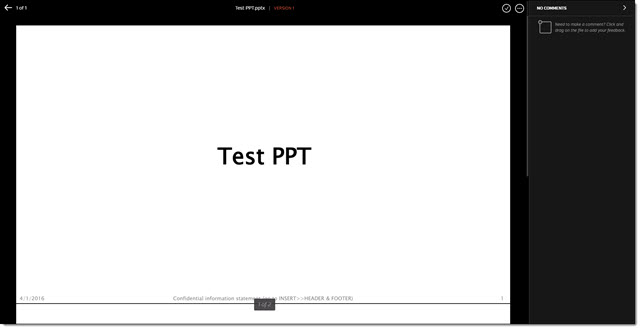
PowerPoint (.ppt, .pptx):
Allows you to view previews of the slides but the preview is a static rendering of each slide – no animation/transitions/videos (like a PDF proof).
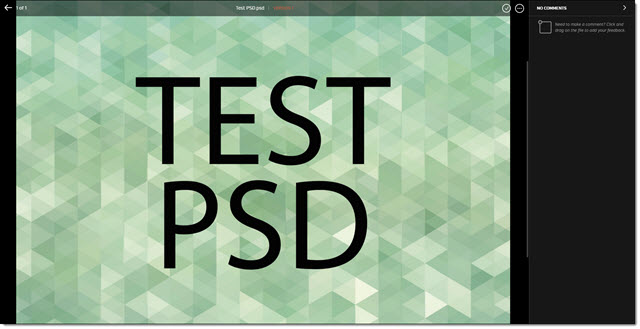
Photoshop (.psd), Illustrator (.ai), Image (.png, .jpg, etc.), and PDF:
All show a preview image of the file, which is fantastic to preview the editable files, but only on the viewable layers when the files were saved.
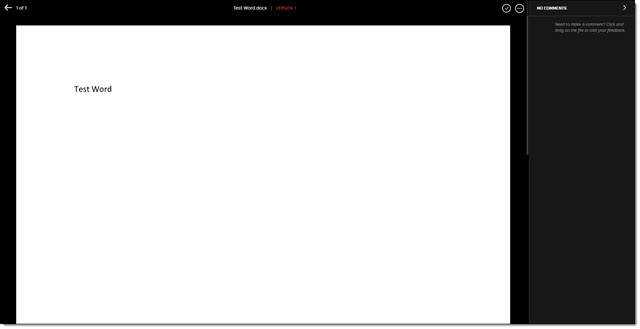
Word (.doc, .docx):
Only shows a preview of the file – again like a static PDF proof; however, you can use the comment feature to highlight changes needed.
Overall, the features offered by Spaces are very useful to anyone reviewing and collaborating on a project of any kind. The only real drawback is the limitation with previewing PowerPoint files directly in the browser (which is a big deal to us!). Other than that, proofing is very simple and worthwhile to ensure a smooth collaboration process.
-Troy @ TLC
Hightail Spaces Video Proofing
Hightail, formally YouSendit, has introduced a new tool, Hightail Spaces. So in addition to the file sharing services, they have added an online tool for video and image feedback.
Using Hightail Spaces for client file review is pretty straight forward and similar to Wipster (see previous post). Here is a quick walk through of the collaborative process:
1. Log in (or sign up) to your account, and click on the Spaces tab.

2. If it is your first time accessing, click Get Started, and Accept.
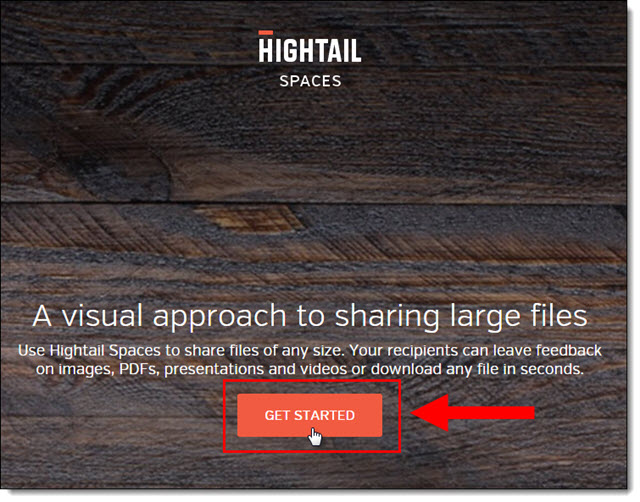
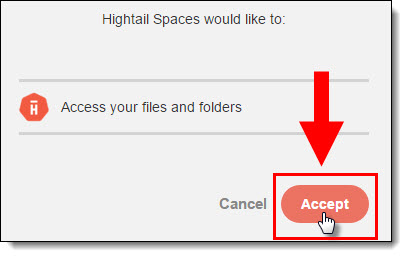
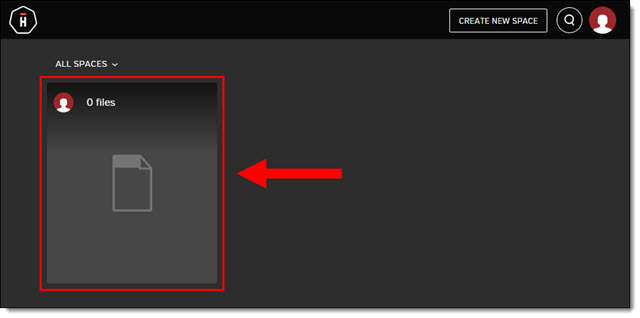
4. All of your Spaces show up, which makes it easy to have separate folders/Spaces for each client or project.
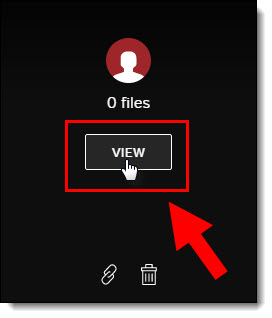
5. Hover over a Space and click to View any files, get a share link, or delete that Space.
6. Spaces can be personalized to a project or client with a: (1) custom name and (2) description. The (3) chart icon shows the analytics of that Space.
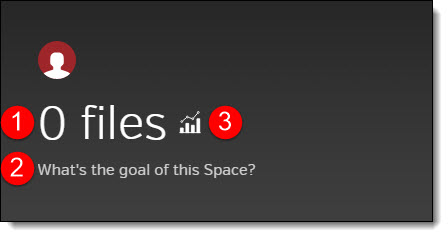
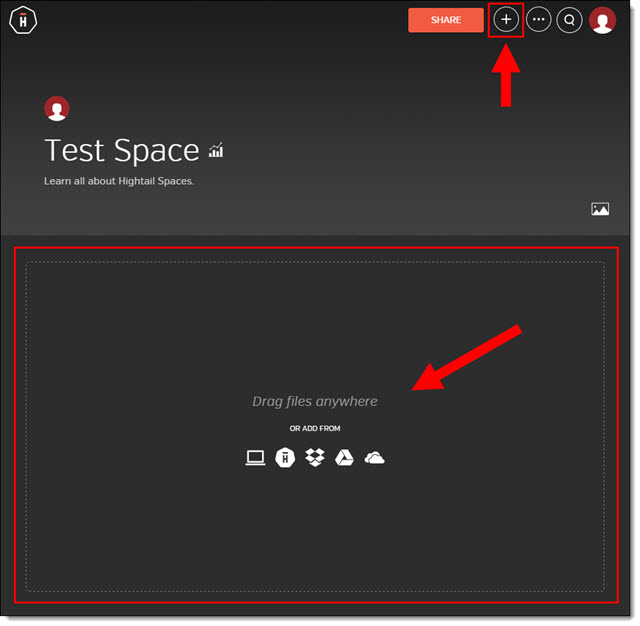
7. When viewing a space, use the Share button to invite clients to securely view any files in there.

8. To add a video for review, either Drag and drop or click the plus icon (which also allows files to be uploaded from other services: Dropbox, Google Drive or Microsoft OneDrive).
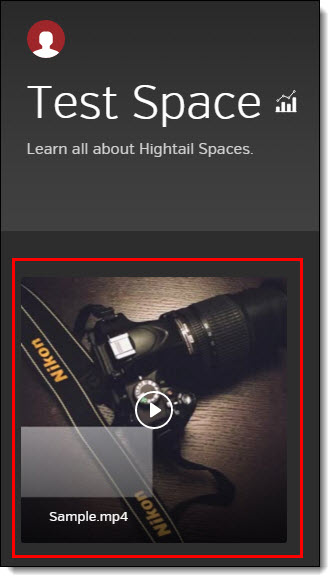
9. Once uploaded, every file is displayed with a preview thumbnail.
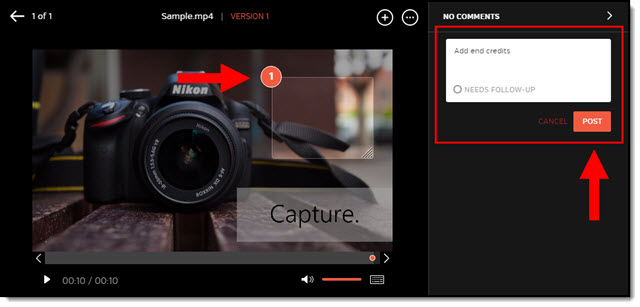
10. To review, your client just clicks on the thumbnail which opens the video preview and the comments side panel. To add a comment, drag a marque directly on the video and type any comment, then click Post. The comment pane lists all of the comments and replies. A really great feature is that the video playback has a red dot for each comment.
10. Spaces allows multiple versions. The current version is displayed at the top of the page. Previous versions are viewable by clicking on the version number in the list.
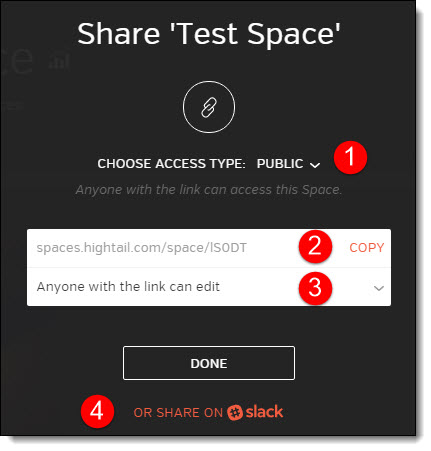
12. Access and share links are controlled by the overall Space and the individual files. (1) Access can be public or private (2) Copy a link to send in an email, text or IM. (3) Access options include edit, comment, download, and (4) Share directly on Slack (if you use that).
Note: Download options are only available with a paid subscription.
Hightail Spaces is another client review option to check out. There are both free and paid options.
-Troy @ TLC
Wipster.com – Online Tool for Video Review
Videos projects, or PowerPoint decks exported to video, are sometimes difficult to send to a client due to large file size. They are also difficult for the client to provide exact feedback. Wipster is one online tool that provides a solution to both difficulties.

Wipster is an online tool that makes getting video to a client, and giving them a way to give you feedback, very easy – and secure. Upload a video to your Wipster account, send a secure link to your client and they can view online, and have a set of tools to make comments and feedback for you to review. Feedback is pinned to a specific frame of the video so you know exactly what is being referenced.
Here is a quick demo of using Wipster to get feedback, or approval, of a video:
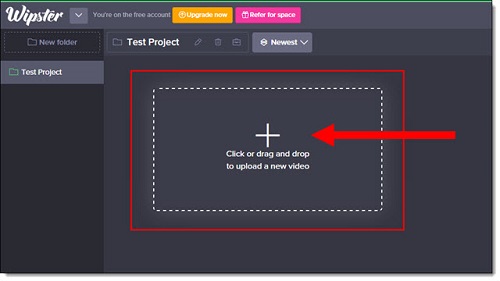
1. Upload the video with a drag and drop system (or click upload to get an upload screen).
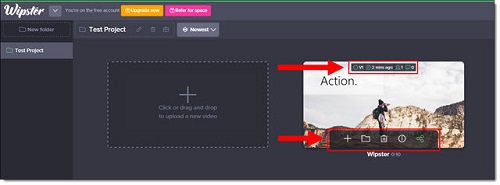
2. Review uploaded video or a new version (there is a versioning control built in). Links can be sent to videos, information can be added and they can be moved to a specific folder or deleted. All the vital information is also available: version number, the upload date, the number of reviewers, and the number of comments.
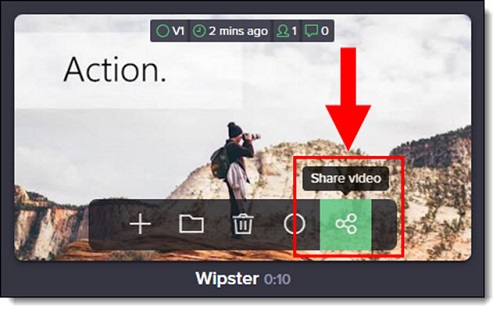
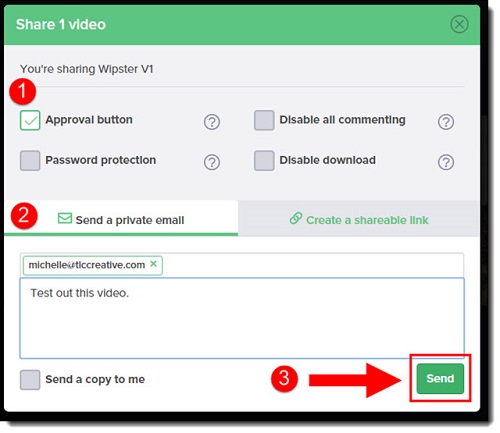
3. To share the video, select the Share video
4. Pick the review options, including feedback notes and an approval button. The video can be password protected, downloads disabled, and commenting turned on/off.
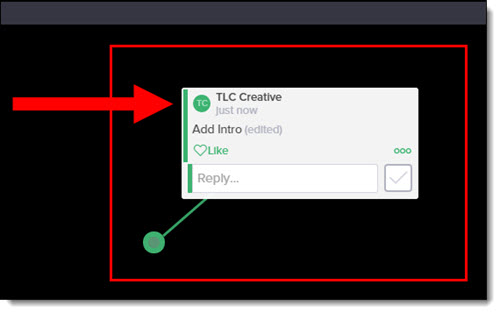
5. When reviewing, adding comments is super easy and intuitive. Click and drag a window around the exact area, on an exact frame, to provide feedback on. Then, type feedback into the comment dialog box. All reviewers are notified of new comments and they can reply to them.
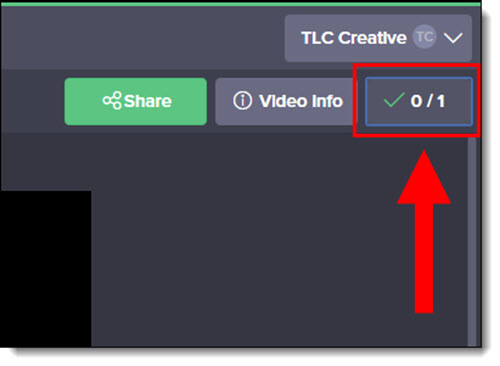
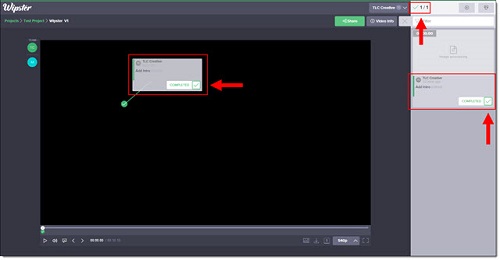
6. To view all comments as an action To Do List, click on the button in the upper right hand corner.
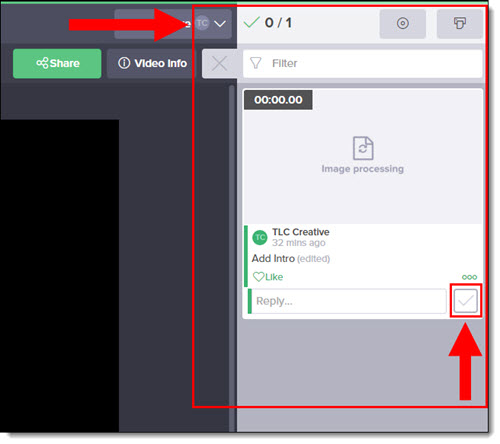
7. A list of all existing comments will expand on the right side of the screen. As you complete each item, check the box next to the Reply…
If an updated version is created, rather than setting up a new Wipster review, just upload the new version to the original video. Everyone is notified of the new version, the feedback process can simply continue until everything is approved and you get the electronic approval to finalize and turn on the download link so the client can have the video for use.
There is a free account option, and approximately $15 month for unlimited video proofs. Wipster just announced a new feature last week that integrates directly into Adobe Premiere called “Wipster Review Panel for Adobe Premiere” which may change the way we implement client feedback on video projects.
-Troy @ TLC
New Podcast Released Today!
Take a listen to the latest Presentation Podcast, “Presentation Software; Setup, Best Practices, Tips & Tricks.” Episode 4 at The Presentation Podcast!

How Do You Proof a Presentation…?
Developing a great presentation involves a lot of communication between designer and presenter. There are lots of options for supplying a proof to a client and receiving feedback and direction on content – some proofing rounds and processes are good, some hinder.

On The Presentation Podcast, a recent episode was all about design studios sending proofs of presentations from clients, listen to it here.
Here is a quick overview of the 4 most common options for providing a proof:
- PDFs are easy to create directly from PowerPoint, are easy to email, are mobile device friendly and have a great built-in commenting function. But they are static, so transitions, animation and video are not seen.
- Video is also easy to export directly from PowerPoint and show all animations, transitions, custom fonts, etc. The downside is that the files can be large and there is not an easy way to provide feedback/comments.
- Sending an editable PowerPoint file is the easiest option. The biggest concern is version control (who is working and minor items like custom fonts, client changes not being caught [for design, file size, etc.]) and ensuring what was designed is what is being seen.
- Co-authoring and collaboration, which can be the built-in Office 2016 feature or an external program, have improved to the point of being a valid solution. But I find the most common issue is scheduling – designer and client having same time available to “meet” can be difficult.
The next few posts are going to demo some of the online proofing tools TLC Creative has been using.
-Troy @ TLC