The Presentation Podcast is Now On SoundCloud!
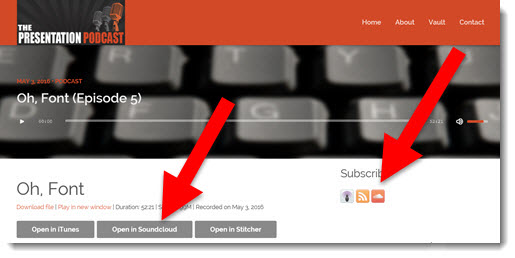
We have added Soundcloud to the ways to get The Presentation Podcast! Just click the SoundCloud icon available on each episode page!

We have added Soundcloud to the ways to get The Presentation Podcast! Just click the SoundCloud icon available on each episode page!
Custom fonts can make a presentation unique, dynamic, align with corporate branding and many other fantastic things. But if a custom font is not installed on the device being used to show the presentation, the presentation may fail visually.

If your presentation is using a custom font, here is an overview on how to get that font installed on all the main device types – if it is possible to install.
Installing a custom font is a simple process on Windows.
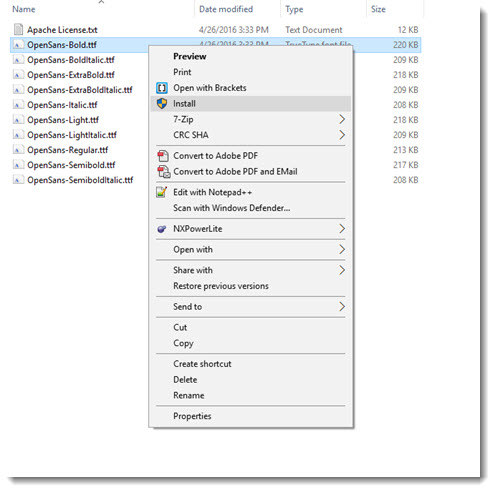
Confirm the font files are copied to the computer (not on a portable drive or network folder). Right-Click the font file and select > Install. Windows will do everything and the font is now available to all programs on that computer.
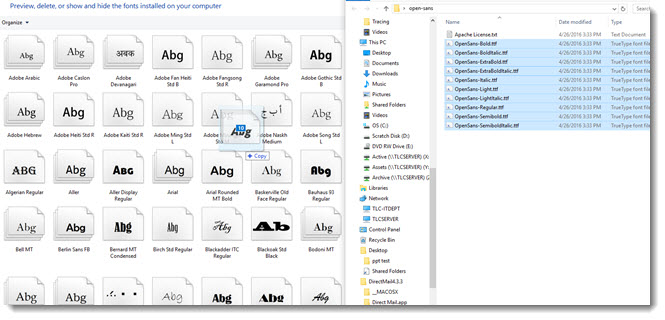
Manually copy font files into the Windows Fonts folder. When a font file is copied into the Windows Font Folder it is automatically installed.
Windows 10: To see what fonts are installed, go to the Windows icon> Settings > type “Fonts” in the search bar on the top right. Your fonts folder should open, displaying currently installed fonts. Drag-and-drop, or copy/paste, font files to be installed.
Win XP, 7 and Win 8.1: To see what fonts are installed, go to Windows Start > Control Panel > Fonts, this will take you to a list of all fonts installed on your PC. Drag-and-drop, or copy/paste, font files to be installed.
A few notes about PowerPoint using custom fonts on Windows:

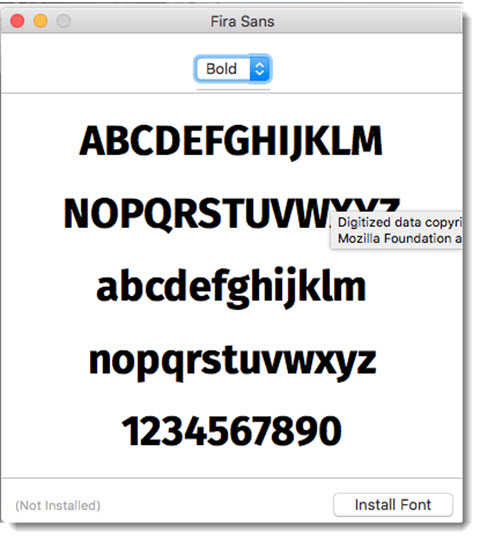
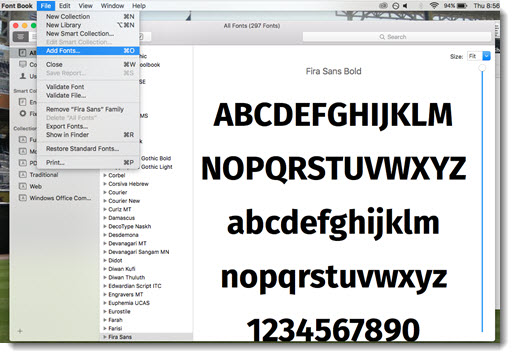
A few notes about PowerPoint and Keynote using custom fonts on the Mac OS:



Prezi is not a device, but because it can be used on all devices listed, here is basic overview of font use by Prezi.
-Troy @ TLC

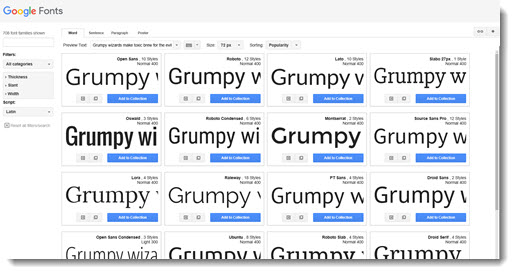
Adding Google Fonts to your presentations is a good option, assuming you are prepared for managing Custom Fonts in a presentation and assuring everyone has knowledge of how to install custom fonts on a computer, has web access to get the font to install, and is prepared for things not displaying as designed if not installed. The other consideration is, do you need another font option? With our internal library of thousands of custom fonts, and the addition of Adobe Typekit providing its thousands of fonts to our design options, too many options can be more to manage and may provide more design options that are not really needed. But, Google Fonts is a great resource every presentation designer has available if needed.
-Troy @ TLC
Adobe Typekit is a combination between an online tool that previews fonts and an installer that adds them to a computer. Adobe TypeKit is included with Adobe Creative Cloud subscriptions.
Yes, if we are talking about desktop PowerPoint and Keynote. Once the Adobe Typekit font is selected and synced to the computer, the font is available in other applications. At TLC, we use PowerPoint for Windows and Mac and Apple Keynote – we can confirm Typekit fonts are available for all of them. Note: PowerPoint may need to be restarted for the font to become available in the font menu.
| Adobe Typekit | Windows | Mac |
| PowerPoint | YES | YES |
| Keynote | N/A | YES |
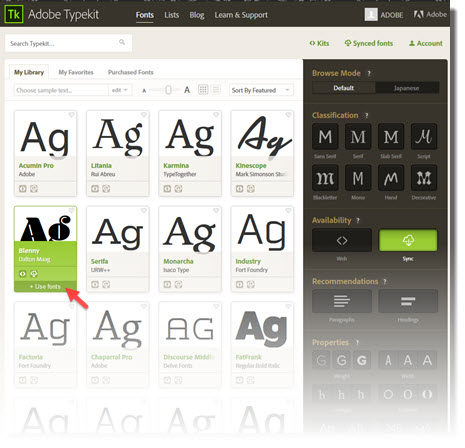
Adobe Typekit is a hybrid app that is web-based, and can also be viewed through the Adobe Creative Cloud app and most Adobe applications (PhotoShop, Illustrator, InDesign, etc.). For our example, we are looking at Typekit through a web browser, which has the most options. Select the font to use in your presentation by going through the font library, select by clicking +USE FONTS (there are a lot of ways to view and search for fonts, and there are thousands of fonts).
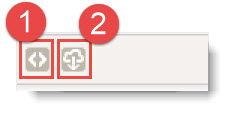
This is where things get a bit confusing. There are two options for using the font: (1) Web Sync, which will make the font available for web use (ie. a website), or (2) Creative Cloud Sync, which will make the font available for use in Desktop apps on a computer. We are installing fonts to a computer for use in PowerPoint.
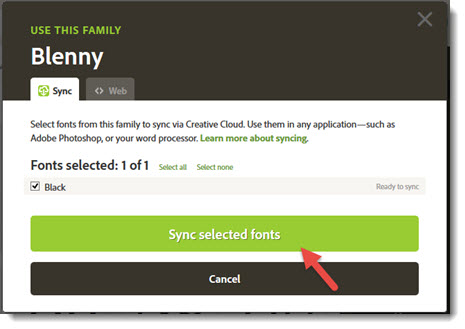
After selecting fonts and use, click SYNC SELECTED FONTS and they will be installed on the computer.
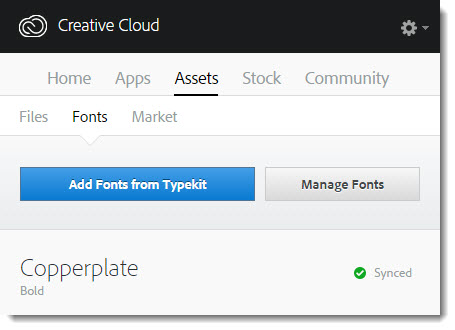
The Creative Cloud Desktop application will open and prompt you to add fonts from Typekit. Below that is a list of all Adobe Typekit fonts currently available.
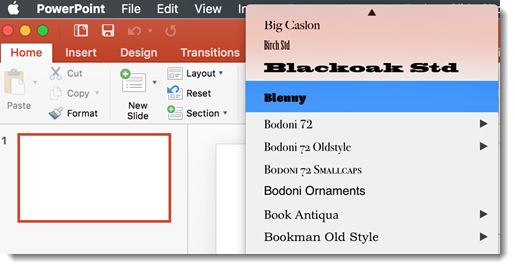
All Adobe Typekit fonts can be used by PowerPoint on both Windows and Mac, but there are some considerations:
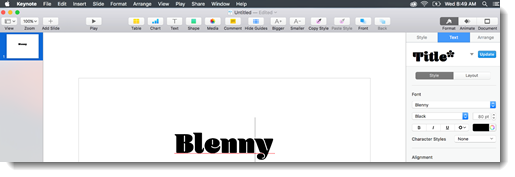
All Adobe Typekit fonts can be used by Keynote, but there are some considerations: Keynote dynamically recognizes newly installed fonts, so there’s no need to restart it after fonts are installed (great!).
-Troy @ TLC
Troy, Nolan and Sandy talk about fonts and presentation design in the latest Presentation Podcast “Oh, Font.” Episode 5 at The Presentation Podcast!
With the millions of designs available, fonts have the ability to make text display anywhere from serious to fun.

Fonts are separate files that must be installed on each device the custom font is needed. There are Microsoft Fonts, Adobe Creative Cloud Typekit, Google Web Fonts, custom fonts from Font Foundries and websites everywhere – but what is a presentation to use? When selecting fonts, you are selecting physical files.
For example, in PowerPoint, all fonts shown in the font drop down menu are actually individual files installed on that computer (TIP: If there is not an “O” or “TT” icon next to a font, it is not installed on that computer and is not going to display as designed). So first, let’s overview the common types of fonts that can installed.
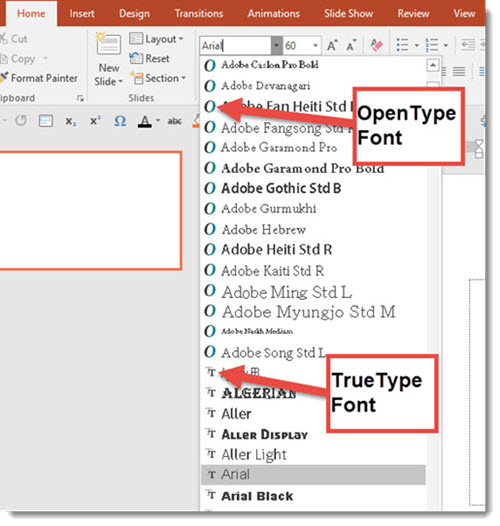
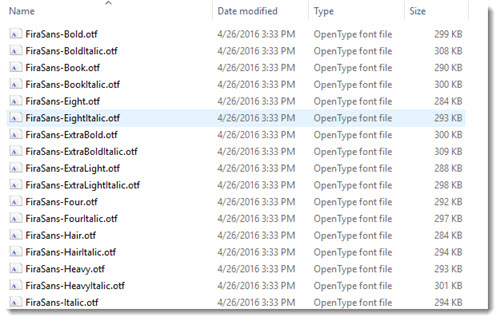
In the history of digital fonts, OpenType is the newest format, with applications adopting its use around the 2,000’s. The extension for OpenType fonts is .OTF and in PowerPoint’s drop down font list, OTF fonts are identified by a large “O” icon. One advantage of OpenType fonts over others is the font file format provides more typographic design options which means more symbols/glyphs/language support/display options. The greater display options (OpenType does not have one display method, but the ability to use legacy display standards and new display standards) mean it is the font file format of choice for newer devices and OS’s – think mobile everything.
Fun Fact: OpenType is a registered trademark of Microsoft, and was developed because Microsoft was unable to license Mac’s “GX Typography” system. Microsoft and Adobe partnered to develop OpenType. Get the full history of OpenType development at this wiki page.
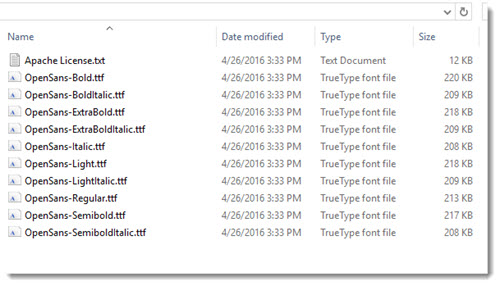
TrueType is still the most common font file type. The extension for TrueType is .TTF and in the PowerPoint font drop down, TrueType fonts are identified with a “TT” icon. True Type is older (than OpenType), a bit less robust when it comes to designing and displaying fonts, but it is the dominant font format used – partially because it is less expensive to license.
Fun Fact: Apple was the first to use TrueType in its 1991 OS with 4 fonts (Times Roman, Helvetica, Courier, Pi), which is originally licensed to Microsoft for free. Full history of TrueType development at this Wiki page.
The last font file format for this discussion is our oldest digital font format, which is the most complex. PostScript fonts are actually 2 files. One is for the onscreen display and the other is used for printing where it literally outlines every letter and symbol sent to the printer. The extension is .PS, and PowerPoint does not support PostScript fonts – so we do not see them in the font drop down menu, even if they are installed on the computer. What makes PostScript fonts important for today’s presentations is PostScript fonts were the first font technology to use mathematical computation to dynamically redraw fonts with vector Bezier curve to allow fonts to be any size. PostScript fonts were also the first to contain multiple character sets (ie. multiple languages).
Fun Fact 1: I remember working with PostScript fonts as the only solution for high quality graphic design and typographic work – and spending huge amounts to buy a custom font for projects.
Fun Fact 2: Printers used to be “PostScript-Ready,” meaning the printer actually had PostScript processing built into it.
Fun Fact 3: Adobe developed Type 1 and Type 3 fonts, which are PostScript file types, back in 1984! There was an earlier Type 0 before those, and development with Type 3-4-5-up to 42 (which was introduced in 2010). Full history of PostScript development at this Wiki page.
-Troy @ TLC
Hightail’s newest feature, Spaces, offers lots of online proofing and collaboration tools (see previous post for review of using Spaces video proofing). In addition, Spaces is able to upload and review a variety of different file formats.

Video files (.mp4, .wmv, .mov, etc.):
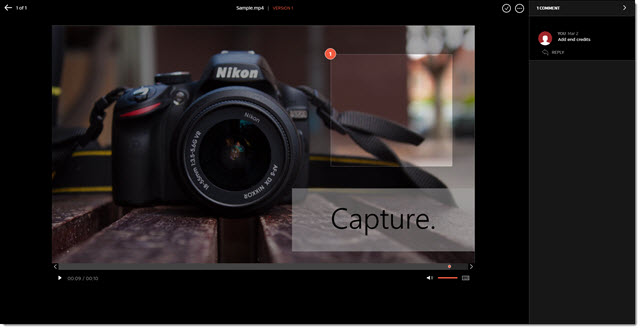
Allows you to view the video directly in the Spaces browser window (not necessary to download), comments can be placed on specific frames throughout the video as well.
Allows you to view previews of the slides but the preview is a static rendering of each slide – no animation/transitions/videos (like a PDF proof).
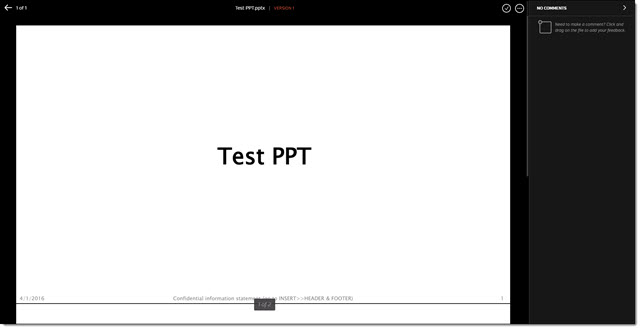
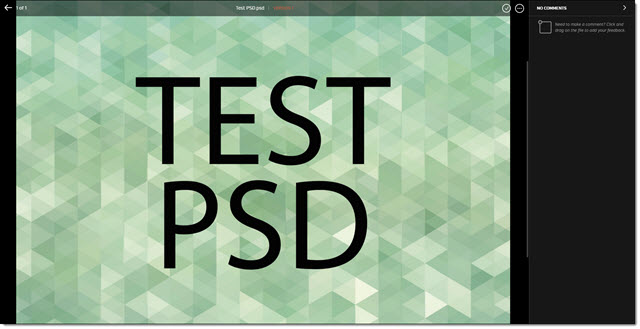
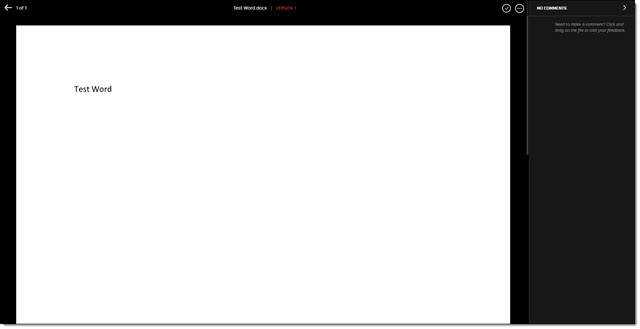
All show a preview image of the file, which is fantastic to preview the editable files, but only on the viewable layers when the files were saved.
Only shows a preview of the file – again like a static PDF proof; however, you can use the comment feature to highlight changes needed.
Overall, the features offered by Spaces are very useful to anyone reviewing and collaborating on a project of any kind. The only real drawback is the limitation with previewing PowerPoint files directly in the browser (which is a big deal to us!). Other than that, proofing is very simple and worthwhile to ensure a smooth collaboration process.
-Troy @ TLC
Hightail, formally YouSendit, has introduced a new tool, Hightail Spaces. So in addition to the file sharing services, they have added an online tool for video and image feedback.
Using Hightail Spaces for client file review is pretty straight forward and similar to Wipster (see previous post). Here is a quick walk through of the collaborative process:
1. Log in (or sign up) to your account, and click on the Spaces tab.

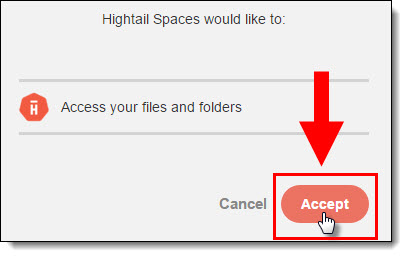
2. If it is your first time accessing, click Get Started, and Accept.
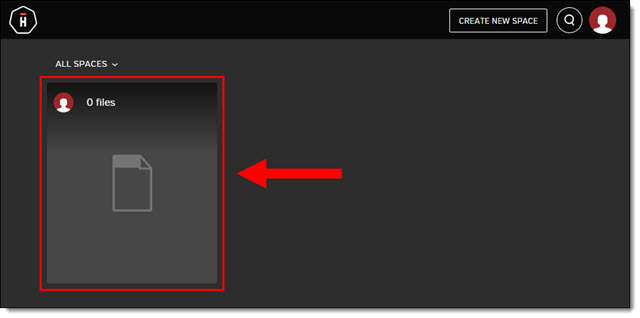
4. All of your Spaces show up, which makes it easy to have separate folders/Spaces for each client or project.
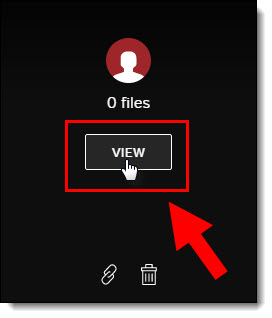
5. Hover over a Space and click to View any files, get a share link, or delete that Space.
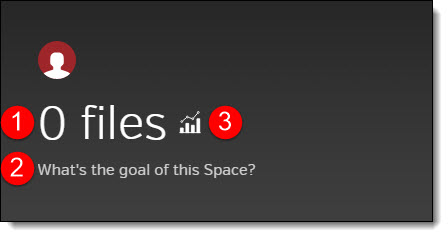
6. Spaces can be personalized to a project or client with a: (1) custom name and (2) description. The (3) chart icon shows the analytics of that Space.
7. When viewing a space, use the Share button to invite clients to securely view any files in there.

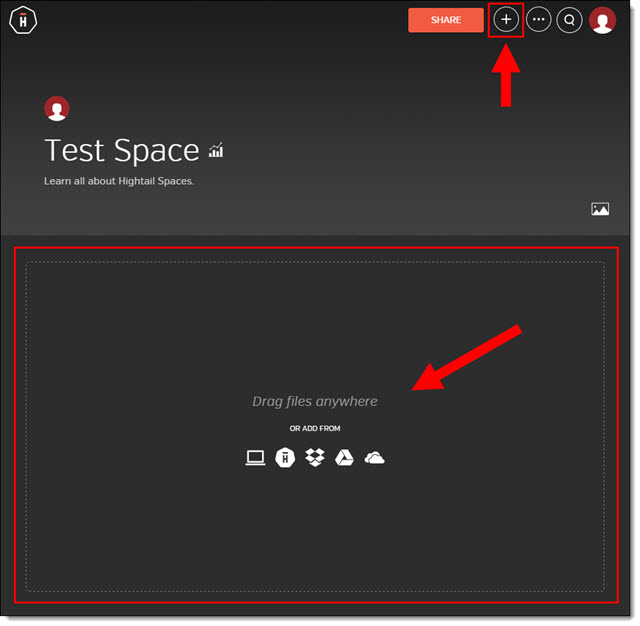
8. To add a video for review, either Drag and drop or click the plus icon (which also allows files to be uploaded from other services: Dropbox, Google Drive or Microsoft OneDrive).
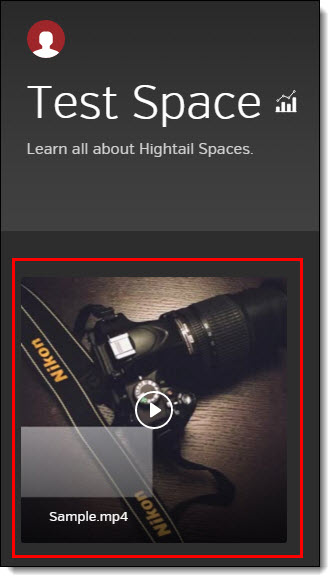
9. Once uploaded, every file is displayed with a preview thumbnail.
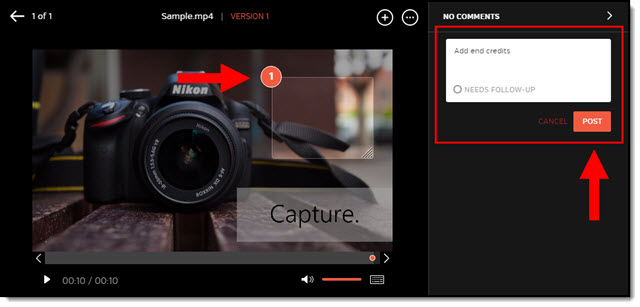
10. To review, your client just clicks on the thumbnail which opens the video preview and the comments side panel. To add a comment, drag a marque directly on the video and type any comment, then click Post. The comment pane lists all of the comments and replies. A really great feature is that the video playback has a red dot for each comment.
10. Spaces allows multiple versions. The current version is displayed at the top of the page. Previous versions are viewable by clicking on the version number in the list.
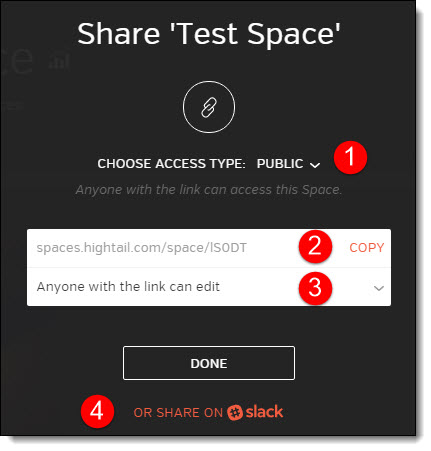
12. Access and share links are controlled by the overall Space and the individual files. (1) Access can be public or private (2) Copy a link to send in an email, text or IM. (3) Access options include edit, comment, download, and (4) Share directly on Slack (if you use that).
Note: Download options are only available with a paid subscription.
Hightail Spaces is another client review option to check out. There are both free and paid options.
-Troy @ TLC
Videos projects, or PowerPoint decks exported to video, are sometimes difficult to send to a client due to large file size. They are also difficult for the client to provide exact feedback. Wipster is one online tool that provides a solution to both difficulties.

Wipster is an online tool that makes getting video to a client, and giving them a way to give you feedback, very easy – and secure. Upload a video to your Wipster account, send a secure link to your client and they can view online, and have a set of tools to make comments and feedback for you to review. Feedback is pinned to a specific frame of the video so you know exactly what is being referenced.
Here is a quick demo of using Wipster to get feedback, or approval, of a video:
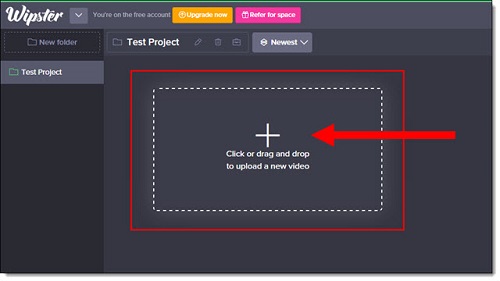
1. Upload the video with a drag and drop system (or click upload to get an upload screen).
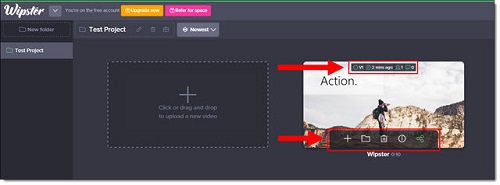
2. Review uploaded video or a new version (there is a versioning control built in). Links can be sent to videos, information can be added and they can be moved to a specific folder or deleted. All the vital information is also available: version number, the upload date, the number of reviewers, and the number of comments.
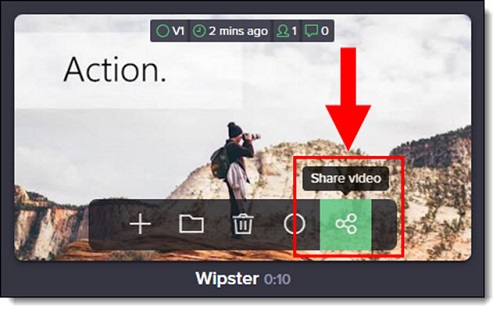
3. To share the video, select the Share video
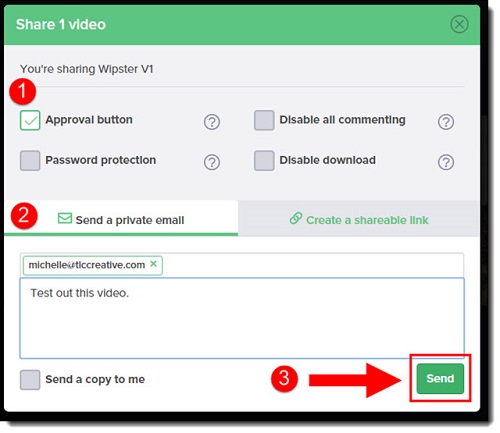
4. Pick the review options, including feedback notes and an approval button. The video can be password protected, downloads disabled, and commenting turned on/off.
5. When reviewing, adding comments is super easy and intuitive. Click and drag a window around the exact area, on an exact frame, to provide feedback on. Then, type feedback into the comment dialog box. All reviewers are notified of new comments and they can reply to them.
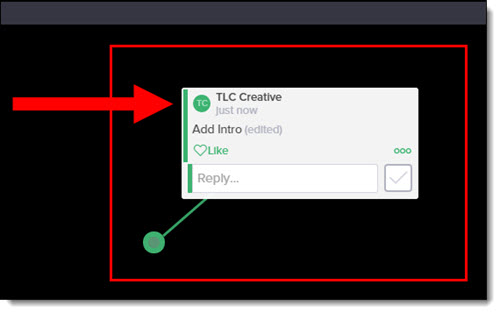
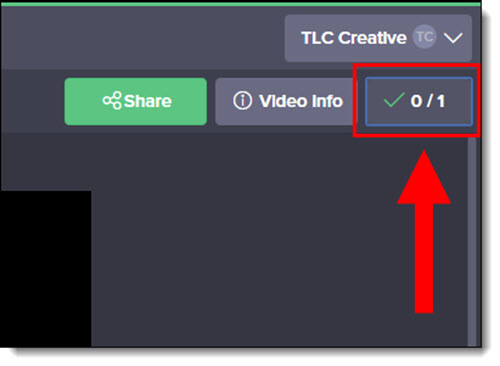
6. To view all comments as an action To Do List, click on the button in the upper right hand corner.
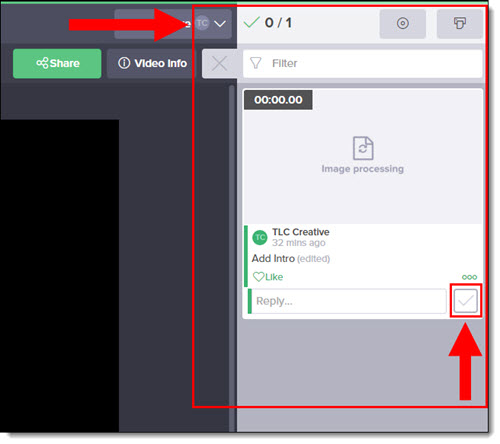
7. A list of all existing comments will expand on the right side of the screen. As you complete each item, check the box next to the Reply…
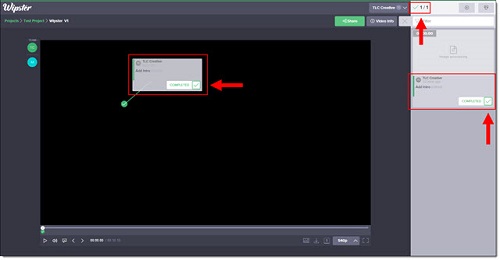
If an updated version is created, rather than setting up a new Wipster review, just upload the new version to the original video. Everyone is notified of the new version, the feedback process can simply continue until everything is approved and you get the electronic approval to finalize and turn on the download link so the client can have the video for use.
There is a free account option, and approximately $15 month for unlimited video proofs. Wipster just announced a new feature last week that integrates directly into Adobe Premiere called “Wipster Review Panel for Adobe Premiere” which may change the way we implement client feedback on video projects.
-Troy @ TLC
Take a listen to the latest Presentation Podcast, “Presentation Software; Setup, Best Practices, Tips & Tricks.” Episode 4 at The Presentation Podcast!