
Things We Do Consistently Well (a Before-and-After example)
Most every presentation software for the past 15 years has made information as bullet points the default way of visually presenting it. While efficient, and duplicate-able, it is definitely not the most attractive or memorable way to present information. Here is an example of “Bullets vs. Visual Layouts” from a recent project.
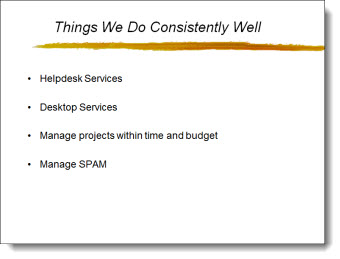
Here is the original slide – simple, consistent, boring bullet list:
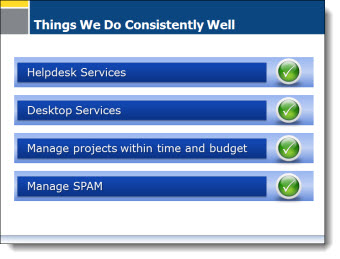
Here is the slide after the presentation makeover project. It has the same information, but has some visual impact with color, shapes, layering, and speaker support animation (obviously not seen in this flat image of the slide):
– Troy @ TLC
You Can Quote That (a before and after example)
Quotes can be powerful in a presentation. But the visual should also be powerful. Here is the original slide:
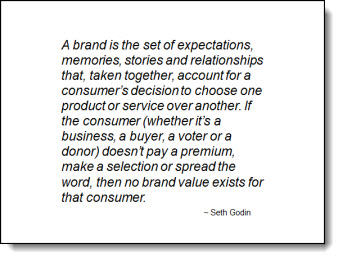
On the good side, it is not to small of text, high contrast colors, and legible.
Here is the slide after the presentation makeover:
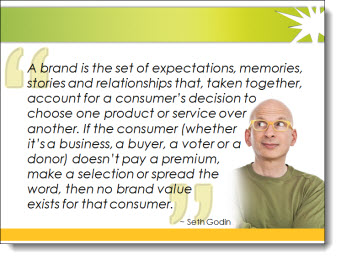
The quote is now on the (new) corporate template, so it ties in with the full presntation look. It is clearly a quotation with the oversize stylist quote marks. And in addition to credit (name of person being quoted) is a great image of the author.
– Troy @ TLC
Using Windows 7 Keyboard Shortcuts to Move A Presentation
Windows 7 is installed on all computers here at TLC Creative Services for good reason – it is the best operating system Microsoft has released. If you are not familiar with moving and arranging application windows using keyboard shortcuts in Windows 7, it is a great feature!
Here is my desktop with PowerPoint open as a small application window:
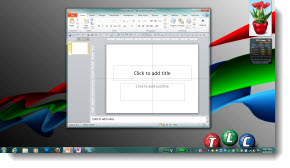
If I used the Windows Key + Up arrow
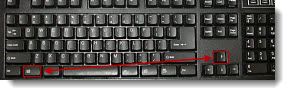
PowerPoint maximizes to full screen:
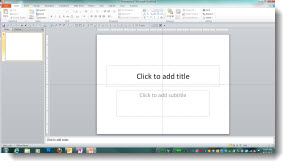
Use the Windows key + Left arrow to snap PowerPoint to the left side:
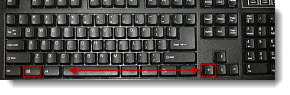
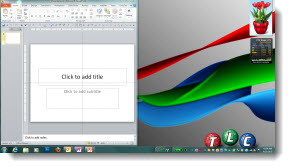
Use the Windows key + Right arrow to snap PowerPoint to the right side:
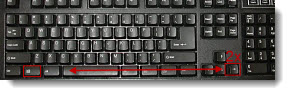
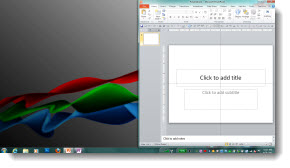
And use the Windows key + Down arrow to minimize PowerPoint:
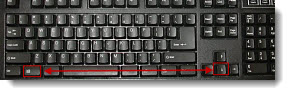
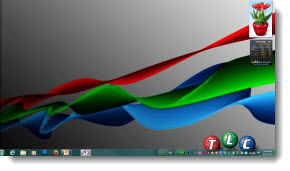
Plus, if you have multiple monitors this also moves the application to the other monitors! Use Window Key + Left/Right arrow to “step” the application across the screens. Or use Window key + Shift + Left/Right arrow to quickly move the application to the other monitor keeping the same size and position when it moves.
Give it a try, I am certain this is a Windows 7 feature you will make a part of your daily design routine like I have.
– Troy @ TLC
Presenting the Lexus LF-LC Prototype
I am fortunate to work on a lot of really great projects. One constant is the content is not something I can share with others, and often it only has that great appeal when viewed in context of the staging, screens and other slides. The Lexus LF-LC is now public knowledge, so I thought I would share a few slides from the show where it was first shown.
I started with a background for the presentation that had lots of motion and energy. The content was lots of visuals and minimal text (no bullets). So working within the brand style guide here is the slide background I created for the LF-LC.

Next step was to optimize the great photography in Photoshop for each slide. The screens for this show were very large and projected in HD, so the slides and images really made fantastic visuals. Now imagine these slides 40′ wide!


– Troy @ TLC
Lots of Fun with Big Staging and Big Presentations!
I wrapped up 2011 with this show in Las Vegas. The staging was fantastic – with 3 large presentation screens and lots of stage lighting (fantastic LD on this event)!
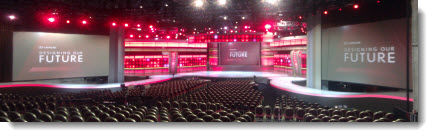
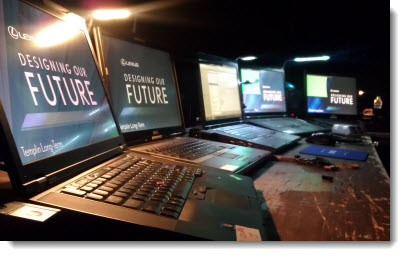
My world consisted of a month of presentation design and one very long and very full table of computers to run everything onsite.
– Troy @ TLC
Showsite and a Trip Back to My Youth
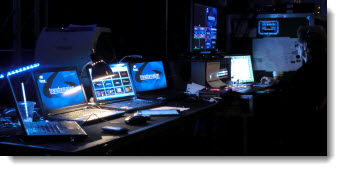
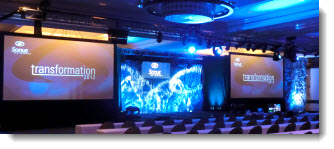
Just wrapped up a show at the La Costa Resort in San Diego. Great event, super crew and good client. All of the presentations ran smoothly and it was fun as I spent much of my youth growing up right there in La Costa.
– Troy @ TLC
“Keep Source Formatting” Adds New Master Slides and Layouts
Using the previous post as the example, when a slide from another presentation is inserted, it can use the destination theme, which means use the existing master slide.
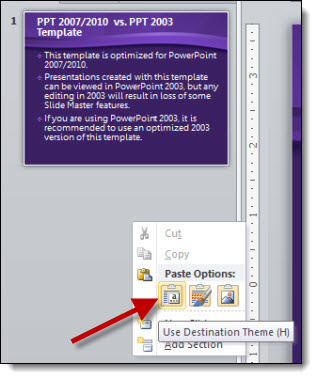
Or it can use the “Source Formatting”
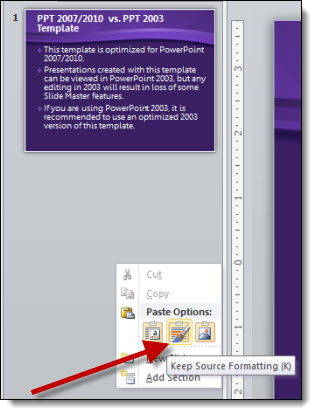
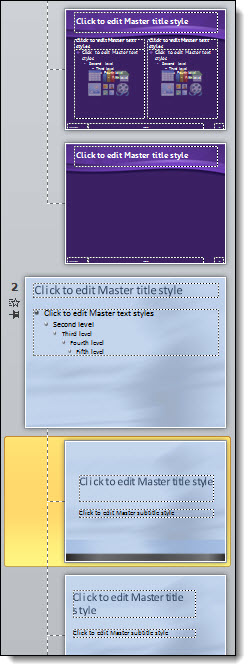
Source Formatting means new master slides and layouts are being added to the presentation:
– Troy @ TLC